
Google Updates Guidance on Fake Bylines and AI-Generated Author Headshots
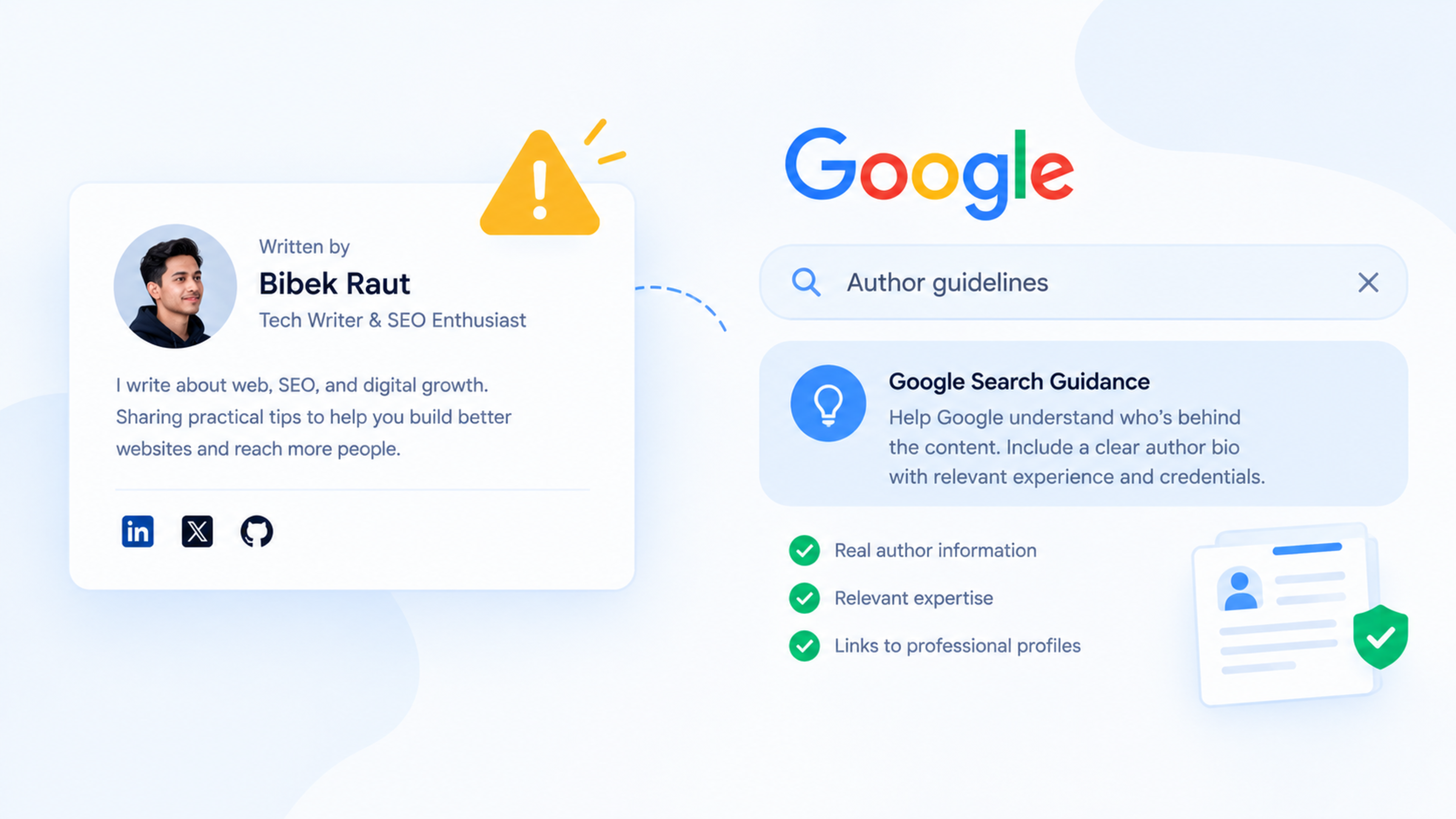
Google Updates Guidance on Fake Bylines and AI-Generated Author Headshots
Google has updated its guidance to make clear that websites should not use fake bylines, invented author credentials, or AI-generated headshots to make content appear more trustworthy than it is. The update reinforces a simple principle: authorship should be honest, verifiable, and connected to a real person or organisation.
For businesses publishing blogs, news updates, and case studies, this is an important reminder. Adding a name to an article is not enough if the author does not exist, has no relevant experience, or is presented with misleading information.
What Google’s updated guidance means
Google’s guidance has long emphasised helpful, reliable, people-first content. The latest update makes the position on deceptive authorship more explicit: websites should not create fake identities or use AI-generated portraits to simulate human credibility.developers.google+1
In practical terms, this means publishers should avoid:
Adding a fake writer’s name to AI-generated articles
Creating fictional author biographies
Using stock photos or AI headshots to represent a non-existent expert
Claiming qualifications, awards, or experience that the author does not have
Reusing the same generic author profile across unrelated topics
Hiding the fact that content was created or reviewed with AI assistance
The issue is not whether AI was used. The issue is whether the website is misleading readers about who created or reviewed the content.
Why authorship matters for SEO
Google uses many signals to assess whether content is helpful, reliable, and trustworthy. Author information is one part of that wider trust picture, especially for topics where expertise matters, such as finance, health, legal advice, technical services, and business decisions.developers.google+1
A credible author profile can help readers and search systems understand:
Who wrote the content
Why they are qualified to write it
What experience they have
Whether the information can be trusted
How the content connects to the wider business
This is closely related to E-E-A-T: experience, expertise, authoritativeness, and trustworthiness. E-E-A-T is not a single Google score or direct ranking switch, but strong trust signals can support better content quality and visibility over time.seo+1
Why AI-generated headshots are risky
An AI-generated headshot may look professional, but it becomes a problem when it is used to represent a person who does not exist or to hide the real origin of content.
For example, publishing an article under a made-up name with an AI-generated photo and a fabricated “10 years of SEO experience” bio can mislead readers. That is different from using AI tools to support research, drafting, editing, or image creation in a transparent way.
If your business uses AI to assist with content, the safer approach is to show:
A real author or reviewer
A genuine photo, if appropriate
An accurate professional bio
Relevant experience and credentials
A link to a real LinkedIn profile or company team page
Clear editorial responsibility for the content
What website owners should do now
1. Audit existing author profiles
Review every author profile on your website. Check that names, photos, job titles, qualifications, and experience claims are accurate.
Remove or correct profiles that are incomplete, duplicated, or connected to content outside the author’s real area of expertise.
2. Use real authors
Every blog post, case study, and news update should have a real author or reviewer. For agencies, this could be a developer, SEO specialist, designer, strategist, or founder who genuinely understands the topic.
For globalitservice.co.uk, articles about web development, technical SEO, and AI automation should be connected to a real team member with relevant experience.
3. Create proper author pages
An author page should make expertise easy to verify. Include:
Full name
Professional photo
Job title and role
Areas of expertise
Relevant experience
Certifications or qualifications, only if real
LinkedIn or professional profile link
List of published articles
Short explanation of how they contribute to the business
Avoid vague descriptions such as “SEO expert” without context. Explain what the author actually does and the type of work they have experience with.
4. Be transparent about AI assistance
Using AI for research, outlines, first drafts, editing, or image creation is not automatically a problem. The risk comes from pretending a human expert wrote or reviewed content when they did not.
A responsible approach is to have a real person review facts, add practical experience, correct errors, and take responsibility for the final published article.
5. Match authors to topics
Do not publish an article about technical SEO under the name of someone with no SEO experience. Topic relevance matters.
For example:
A web developer should author Next.js, performance, or CRM dashboard content.
An SEO specialist should author technical SEO, Core Web Vitals, or search visibility content.
An automation specialist should author AI workflow and business automation content.
A founder or senior strategist can author business, growth, and service-related updates.
What this means for E-E-A-T
This update does not replace E-E-A-T. It strengthens the importance of honest authorship within it.
Strong E-E-A-T signals include:
Real experience with the subject
Demonstrated expertise
Recognition from customers, clients, or industry platforms
Transparent business information
Accurate and well-sourced content
Secure and professional website experience
Consistent brand and author information
For small businesses, the best approach is not to invent authority. It is to show the authority you already have through real projects, client results, team experience, and useful content.
How this affects AI search
AI search systems increasingly need to decide which sources are reliable before citing them. Clear authorship, consistent brand information, original insight, and accurate content make it easier for AI tools to understand who is behind a website.
Fake bylines and AI-generated identities work against this. They create uncertainty about accountability and can weaken trust in the entire website.
If you want your content to be cited by AI tools, focus on:
Real authors with relevant expertise
Original examples and case studies
Clear, accurate explanations
Structured headings and FAQs
Transparent business information
Consistent author and brand details across the web
Practical checklist for publishers
Before publishing your next article, check:
Does the article have a real author?
Does the author have relevant experience?
Is the author photo genuine?
Are all credentials and claims accurate?
Does the author page link to a real profile?
Is the content reviewed by someone accountable?
Is AI assistance used transparently?
Does the article include original insight or practical experience?
Are sources, examples, and claims accurate?
Is the author connected to related articles on the website?
How Global IT Services can help
Global IT Services helps businesses build trustworthy websites through technical SEO, content strategy, AI search optimisation, and modern web development.
If your website publishes blogs, case studies, or news updates, we can help you create a clear author structure, improve E-E-A-T signals, and make your content easier for Google and AI search systems to trust.
Frequently Asked Questions
Are AI-generated author headshots against Google’s guidelines?
Google’s updated guidance discourages deceptive practices, including using AI-generated headshots to create fake author identities or make content appear human-written when it is not. Using AI tools transparently is different from using them to mislead readers.
Can I use AI to write blog posts?
Yes, but the content should be accurate, helpful, reviewed by a real person, and aligned with your business expertise. Do not attach a fake author name or invented credentials to AI-generated content.
Does every blog post need a real author?
Yes, ideally. A real author or reviewer helps readers understand who is responsible for the information. It also supports trust, especially for technical, financial, legal, health, or business-related topics.
What should an author bio include?
A strong author bio includes the person’s real name, role, relevant experience, areas of expertise, professional photo, and a link to LinkedIn or another verifiable profile. Only include qualifications or awards that are genuine.
Is E-E-A-T a direct Google ranking factor?
No. E-E-A-T is not a single direct ranking factor or score. However, Google uses many signals to assess content quality, reliability, and trust, and strong E-E-A-T-related practices can support better long-term search performance.
Technical SEO & Global Growth Marketing
End-to-end search engine optimization, programmatic SEO, technical audits, and content strategy for businesses targeting local and international markets.
Feedback & Discussion
Have questions or insights? Share your thoughts below.