
Europe Fridge Cyberattack 2026: Supermarkets Hit Across Seven Countries
Europe Fridge Cyberattack 2026: Supermarkets Hit Across Seven Countries
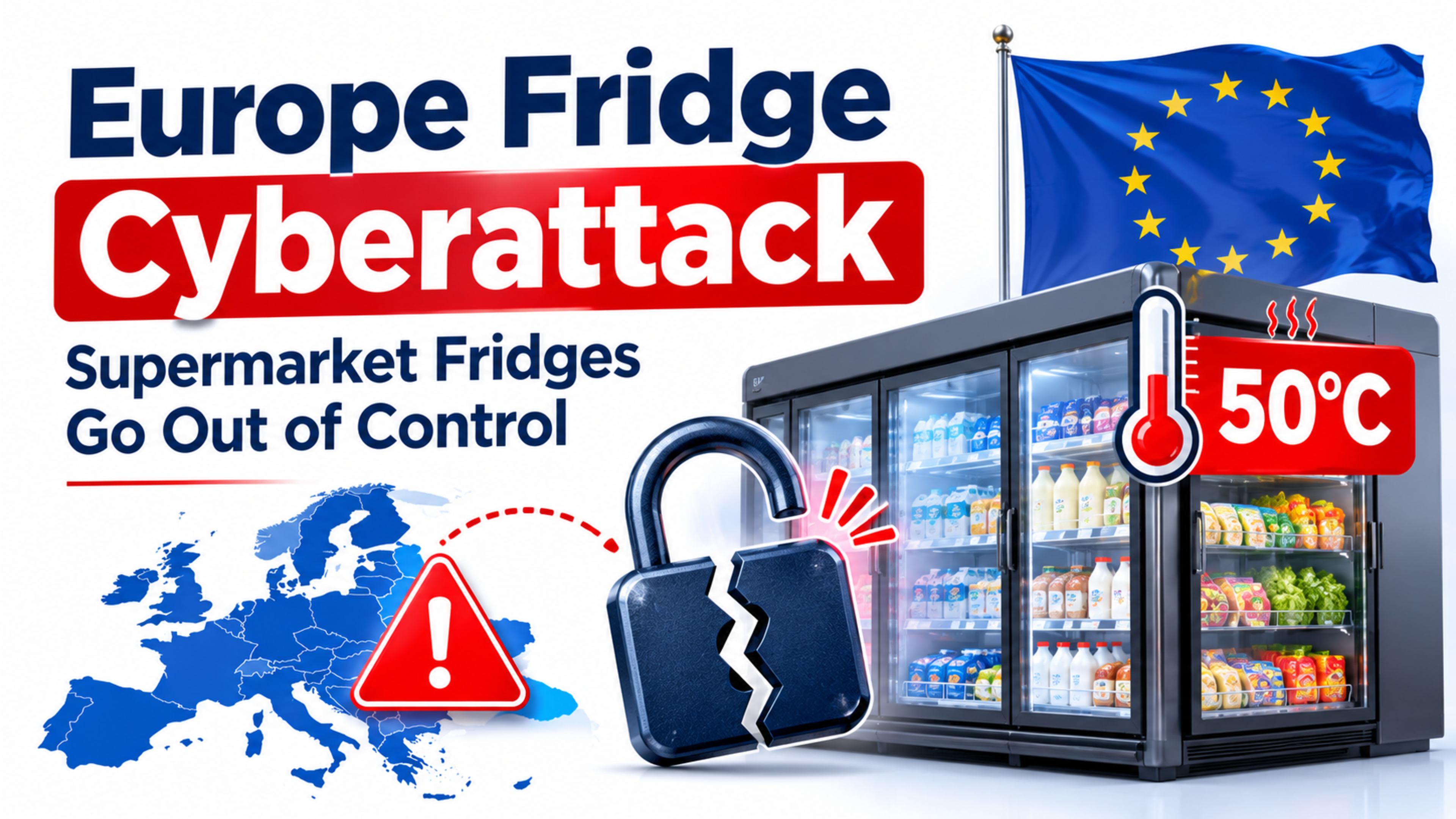
Supermarkets across at least seven European countries were hit by a suspected cyberattack on 2 November 2026, with fridge and freezer temperatures remotely raised to as high as 50°C (122°F), spoiling food and forcing some stores to discard stock.
The European Union has warned that the incident may be a deliberate attempt to disrupt Europe’s food supply chain, following a similar attack in France last month that affected around 700 supermarkets.
Which countries were affected?
Supermarkets in the following countries reported refrigeration problems linked to the cyberattack:
Belgium
Estonia
Finland
Ireland
Italy
Luxembourg
Netherlands
Portugal
Swedenafp
More than 100 stores were affected in this latest wave, according to Reuters.
What happened?
Attackers appear to have remotely manipulated supermarket refrigeration systems, including defrost mechanisms, causing fridges and freezers to overheat dramatically.tomshardware
Key facts:
Fridge and freezer temperatures raised to as high as 50°C (122°F).bbc
More than 100 stores affected across multiple countries.
Food worth millions of euros spoiled or destroyed.
Some stores forced to dispose of ruined food.
A Swedish ICA store in Sjöbo confirmed its fridges and freezers had been hacked and set to 50°C.
How did hackers do it?
The suspected attack method involved remotely accessing and manipulating supermarket refrigeration control systems, particularly defrost mechanisms.tomshardware
Suspected attack method
Attackers gained access to IoT-connected refrigeration controllers
Defrost cycles were triggered repeatedly or overridden
Compressors were disabled or settings changed
Temperatures rose from safe storage levels to 50°C
Perishable food spoiled within hours
This type of attack exploits the growing connectivity of commercial refrigeration systems, which are increasingly managed remotely for energy efficiency and maintenance.
Connection to France attack
This incident follows a similar cyberattack in France in October 2026, which affected around 700 supermarkets and caused fires as well as food losses estimated in the tens of millions of euros.
The Pentagon is also investigating whether rogue freezer incidents at US military bases in August are connected to the same campaign.
Timeline of attacks
Date | Location | Impact |
|---|---|---|
August 2026 | US military bases | Rogue freezer incidents, under investigation upr |
October 2026 | France | ~700 supermarkets hit, fires, tens of millions in losses eunews |
2 November 2026 | 7+ European countries | 100+ stores, fridges heated to 50°C bbc |
EU response
The European Union has warned that the attacks may represent a deliberate attempt to disrupt Europe’s food supply chain.
EU officials are treating the incident as a potential critical-infrastructure attack, given its scale, coordination, and impact on food safety and availability.
Why IoT security matters
This attack highlights the growing risk of Internet of Things (IoT) devices in critical infrastructure.
What is IoT risk?
IoT devices—smart fridges, sensors, controllers, cameras, and industrial equipment—are often connected to the internet for remote monitoring and management. If poorly secured, they become entry points for attackers.
Lessons for businesses
Segment IoT devices from core business networks
Change default passwords
Apply firmware updates regularly
Use multi-factor authentication for remote access
Monitor unusual device behaviour
Have incident response plans
Audit third-party vendors and suppliers
Impact on food supply and businesses
The attacks have caused:
Large-scale food spoilage and waste
Financial losses in the millions of euros
Store closures and empty shelves
Fire risks from overheating equipment
Supply chain disruption across borderseunews
Supermarkets are now reviewing their refrigeration security, and technology suppliers such as Kitman Coldtech are working with affected retailers to restore safe operations.
What happens next?
Investigations are ongoing across multiple countries
EU may introduce new IoT security regulations
Retailers are expected to upgrade refrigeration security
The identity and motive of attackers remain unclear
More countries or stores may report similar incidents
This is a developing story. Global IT Services will update this article as new verified information emerges.
Frequently Asked Questions
Which countries were hit by the Europe fridge cyberattack?
Supermarkets in Belgium, Estonia, Finland, Ireland, Italy, Luxembourg, the Netherlands, Portugal, and Sweden reported problems linked to the cyberattack.
How high did fridge temperatures rise?
Fridge and freezer temperatures were raised to as high as 50°C (122°F) in some affected stores.
How many stores were affected?
More than 100 stores were affected in the latest wave, according to Reuters.
Was this connected to the France attack?
Yes. This incident follows a similar cyberattack in France in October 2026 that affected around 700 supermarkets.
Who is behind the attacks?
The identity and motive of the attackers remain unclear. The EU has warned the attacks may be a deliberate attempt to disrupt the food supply chain.
Can smart fridges at home be hacked?
Yes. Any internet-connected device with weak security can potentially be hacked. Consumers should change default passwords, update firmware, and segment IoT devices from main networks.
Sources
BBC — Shop freezers in seven European countries hit by cyber-attack
POLITICO — Europe’s supermarkets hit by new wave of cyberattacks
Sky News — Hackers target refrigerators in Ireland and European countries
Tom’s Hardware — Supermarket freezers across Europe struck in second cyberattack
NPR/Uprising — A new cold war: hackers target fridges across the globe
Forbes — New wave of refrigerator cyberattacks roils European supermarkets
Feedback & Discussion
Have questions or insights? Share your thoughts below.