
Ecommerce Growth in Nepal: What Online Sellers Should Prepare for Next
Ecommerce Growth in Nepal: What Online Sellers Should Prepare for Next
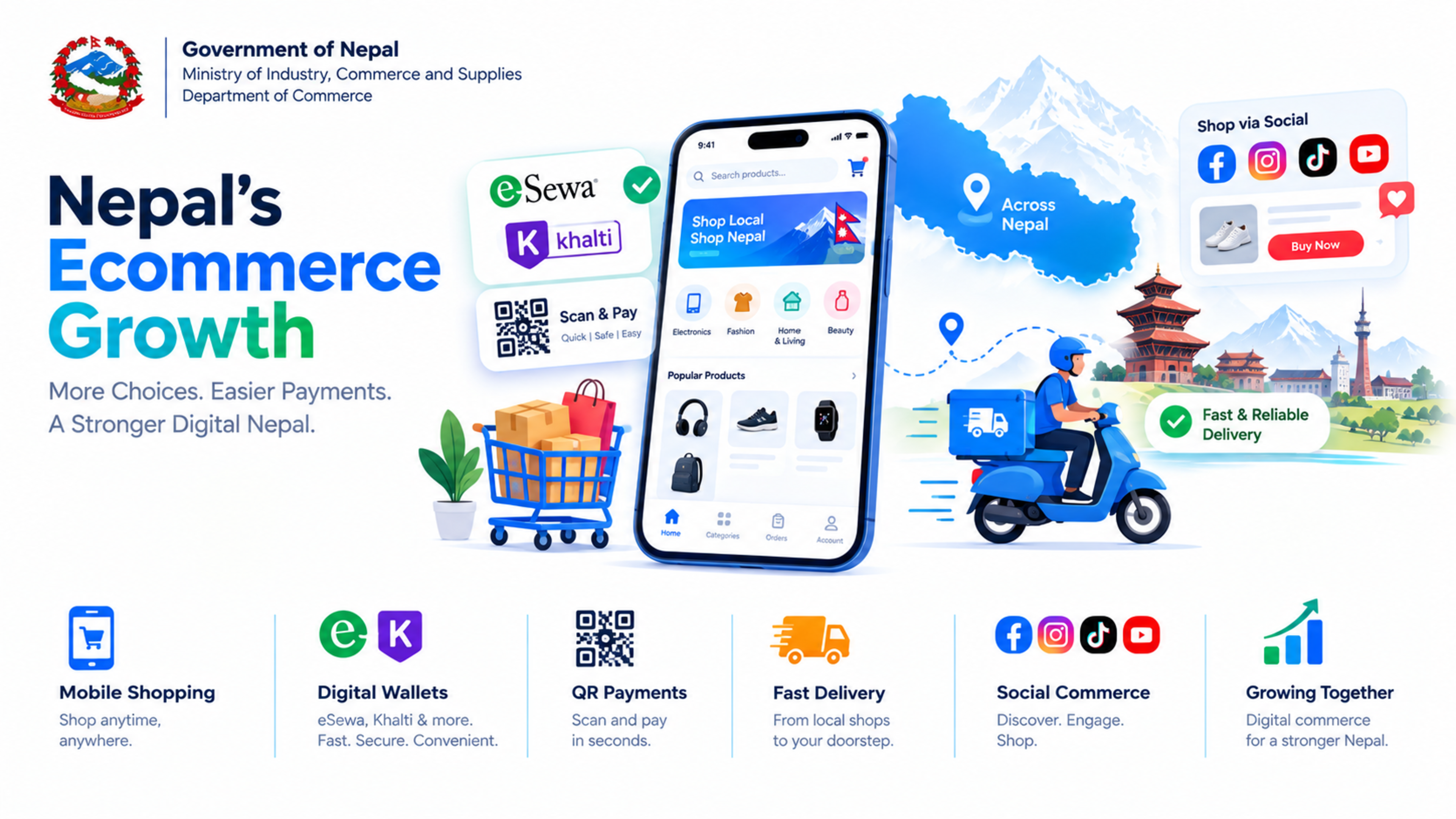
Nepal’s ecommerce market is entering a new phase. Online sellers are no longer competing only on product price-they are competing on delivery speed, payment convenience, customer trust, mobile experience, and reliable order management.
Digital payments are growing quickly, social commerce continues to bring new sellers online, and customers increasingly expect clear delivery timelines and easy checkout. For online sellers, the next stage of growth will depend on building systems that can handle more orders without creating confusion, delays, or poor customer experiences.
What is driving ecommerce growth in Nepal?
1. Mobile-first shopping
Most online shoppers in Nepal browse and buy using smartphones. This means an ecommerce business cannot treat mobile design as an afterthought. Product pages, checkout forms, menus, and payment flows must work smoothly on small screens.
2. Digital payment adoption
Digital payments are expanding rapidly in Nepal. Nepal Rastra Bank data show strong growth in QR payments, mobile banking, digital wallets, and online card transactions.
QR-based transactions increased sharply, while mobile banking and digital wallet transactions also continued to grow. This gives online sellers more ways to accept payments beyond cash on delivery.
3. Social commerce
Facebook, Instagram, and TikTok remain important discovery channels for Nepali sellers. Social commerce helps small vendors reach customers quickly, especially through reels, live selling, comments, and direct messages.kathmandupost+1
However, managing orders through direct messages does not scale well. As order volume grows, sellers need a proper website, inventory system, and order-management process.
4. Faster delivery expectations
Quick-commerce services and improved delivery networks are changing customer expectations. Some services now promise door-to-door delivery within minutes in certain areas, while customers increasingly expect clear delivery timelines and tracking.
For sellers, delivery is no longer just logistics. It is part of the customer experience.
What online sellers should prepare for
1. Move from social selling to a proper online store
Social media is excellent for marketing, but it is not enough for a growing business. Sellers should build a proper ecommerce website where customers can browse products, check stock, place orders, pay securely, and receive order updates.
A dedicated website helps sellers:
Reduce manual order handling
Track inventory more accurately
Manage customer details securely
Run discounts and promotions
Improve SEO visibility
Build a recognisable brand
Reduce dependence on one social platform
2. Offer multiple payment options
Customers have different payment preferences. Some prefer digital wallets, some use mobile banking, some prefer QR payments, and others still choose cash on delivery.
Online sellers should consider supporting:
eSewa
Khalti
IME Pay
Mobile banking
QR payments
Debit and credit cards
Cash on delivery
Digital wallets and QR payments are becoming mainstream, but cash on delivery remains important for many customers. Offering both can reduce checkout abandonment.webappnepal+2
3. Make mobile checkout simple
A slow or complicated checkout can cause customers to leave before completing an order.
Improve mobile checkout by:
Reducing the number of form fields
Allowing guest checkout
Showing delivery costs early
Offering clear payment choices
Using large, easy-to-tap buttons
Avoiding unnecessary pop-ups
Testing the full checkout flow on real phones
4. Be transparent about delivery
Delivery outside the Kathmandu Valley remains one of the biggest challenges for Nepali ecommerce businesses.
Sellers should clearly show:
Delivery areas
Estimated delivery time
Delivery charges
Order-tracking status
Return and exchange policy
Customer-support contact options
Overpromising fast delivery can damage trust if orders arrive late. Clear communication builds more long-term customer loyalty.
5. Use inventory and order management
As order volume increases, manual tracking through messages and spreadsheets becomes risky. Sellers may face stock errors, duplicate orders, delayed dispatch, and poor customer communication.
A proper ecommerce system should help sellers manage:
Product stock
Orders
Customer details
Payment status
Delivery status
Returns and refunds
Discounts
Sales reports
6. Build trust with clear policies
Trust remains a major factor in Nepali online shopping. Clear product information, real photos, honest pricing, return policies, and responsive support can help customers feel confident buying online.
Sellers should display:
Contact details
Return and refund policy
Delivery policy
Privacy policy
Product specifications
Real customer reviews where possible
Secure payment options
Ecommerce website features sellers need
A growing online store should include more than a product catalogue.
Feature | Why it matters |
|---|---|
Mobile-first design | Most customers browse and buy from smartphones. |
Fast product pages | Slow pages increase abandonment and reduce conversions. |
Secure checkout | Customers need confidence when sharing payment details. |
Multiple payment options | Customers prefer different wallets, banks, QR, and COD. |
Inventory management | Prevents overselling and stock confusion. |
Order tracking | Reduces support enquiries and improves trust. |
Discount coupons | Helps sellers run promotions and seasonal campaigns. |
SEO-friendly product pages | Helps products appear in Google search results. |
Customer accounts | Makes repeat purchases and order history easier. |
Analytics | Shows which products, channels, and campaigns perform best. |
How AI can help online sellers
AI can help Nepali ecommerce businesses improve operations without increasing staff costs.
AI customer support
An AI assistant can answer common questions about delivery, product availability, sizing, returns, and order status.
AI product recommendations
AI can suggest related products based on browsing behaviour, purchase history, or product categories.
AI-powered product descriptions
Sellers can use AI to create first drafts of product descriptions, then review them for accuracy and brand tone.
AI demand forecasting
AI can help identify which products may sell more during festivals, seasonal changes, or promotional campaigns.
AI review analysis
AI can summarise customer reviews and identify common complaints, product issues, or delivery problems.
Common mistakes Nepali sellers make
Avoid these mistakes:
Relying only on Facebook or Instagram messages for orders
Not showing clear delivery charges and timelines
Using poor-quality product photos
Ignoring mobile checkout experience
Offering only one payment method
Not tracking inventory properly
Having no clear return policy
Ignoring website speed and SEO
Promising delivery times they cannot meet
Not collecting customer feedback
How to prepare for the next stage
Online sellers should take a phased approach.
Start selling through social media to test demand.
Build a proper ecommerce website once orders increase.
Add secure digital payment options alongside cash on delivery.
Set up inventory and order management.
Improve delivery communication and tracking.
Invest in SEO, product content, and customer support.
Use analytics to identify best-selling products and customer behaviour.
Add AI automation for support, recommendations, and reporting.
How Global IT Services can help
Global IT Services helps businesses build ecommerce websites, custom online stores, product catalogues, payment integrations, inventory systems, delivery workflows, and AI-powered customer-support tools.
If you are selling through Facebook, Instagram, or TikTok and want to grow into a proper online business, a scalable ecommerce platform can help you manage orders more professionally.
Frequently Asked Questions
Is ecommerce growing in Nepal?
Yes. Nepal’s ecommerce market is growing due to mobile-first shopping, digital payment adoption, social commerce, and improving delivery services.kathmandupost+2
What payment methods should Nepali online stores accept?
Online stores should consider eSewa, Khalti, IME Pay, mobile banking, QR payments, debit and credit cards, and cash on delivery. Offering multiple options can reduce checkout abandonment.webappnepal+2
Do Nepali sellers still need a website if they sell on Facebook?
Yes. Social media is useful for marketing, but a website gives sellers better control over products, orders, customer data, branding, SEO, and long-term growth.
What is the biggest challenge for ecommerce in Nepal?
Delivery outside the Kathmandu Valley remains a major challenge. Sellers should provide clear delivery timelines, charges, tracking, and customer support.
How can AI help ecommerce sellers in Nepal?
AI can help with customer support, product recommendations, demand forecasting, review analysis, product descriptions, and reporting.
What features should an ecommerce website have?
A strong ecommerce website should include mobile-first design, fast product pages, secure checkout, multiple payment options, inventory management, order tracking, SEO-friendly product pages, and analytics.
Feedback & Discussion
Have questions or insights? Share your thoughts below.