
Custom Software Development in Nepal: Process, Cost, and Timeline
how custom software development works in Nepal. Understand the process, cost factors, timelines, technology options, and how to choose the right development partner.
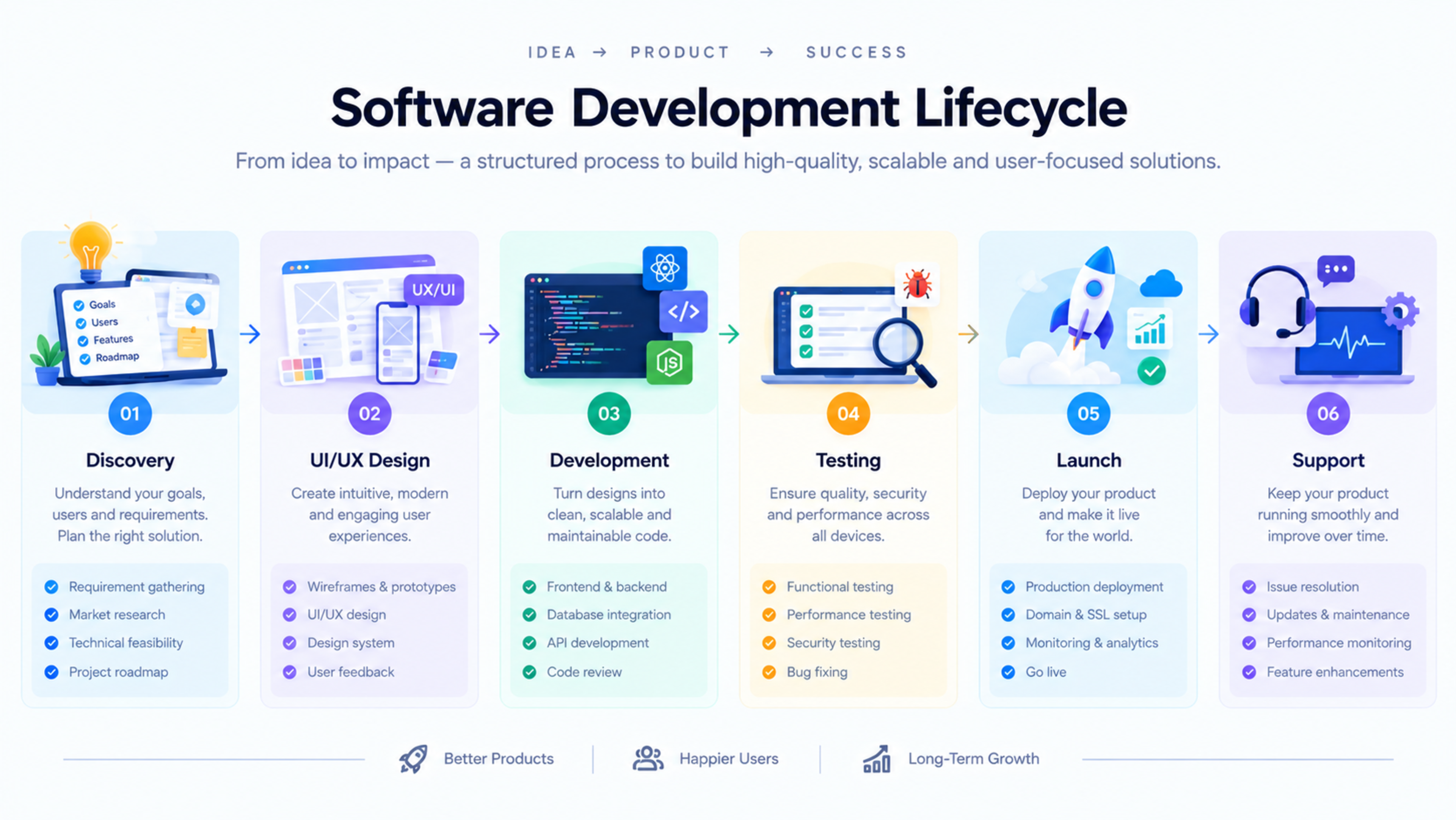
Custom Software Development in Nepal: Process, Cost, and Timeline
Custom software development in Nepal is a practical option for businesses that need a system built around their exact workflow. Instead of forcing your team to adjust to ready-made software, custom software is designed around how your business actually operates.
This guide explains how custom software projects work in Nepal, what affects cost and timeline, which technologies are commonly used, and how to choose the right development partner.
What is custom software?
Custom software is software designed specifically for one business or purpose. It can be a customer portal, CRM, booking system, inventory platform, learning management system, HR system, mobile app, or SaaS product.
Unlike off-the-shelf software, custom software can match your exact process, integrate with your existing tools, and grow with your business.
Examples include:
A CRM dashboard for tracking leads and sales activity
A booking system for clinics, salons, or travel companies
An inventory and delivery management system
A membership or subscription portal
An HR and payroll system
A learning management platform
A custom ecommerce backend
An AI-powered reporting or automation tool
For a practical example, read our case study on how a custom CRM dashboard helped a sales team track leads faster.
When should a business choose custom software?
Custom software is worth considering when ready-made tools no longer fit your workflow.
Choose custom development if you:
Use multiple tools that do not communicate with each other
Spend too much time on manual data entry
Need a specific workflow that existing software cannot support
Want to automate repetitive business tasks
Need custom reporting or dashboards
Plan to scale a product or service
Need full control over data, security, and integrations
Want to build a SaaS product or internal business platform
If you only need a simple website or standard online store, a template-based solution may be more cost-effective.
Custom software development process
A good custom software project follows a structured process. Skipping discovery or testing often leads to delays, unexpected costs, and poor adoption.
1. Discovery and requirement analysis
The first stage is understanding the business problem. The development team should ask about your users, workflow, current tools, data, goals, and success metrics.
This stage usually produces:
Project goals
User roles
Feature list
User flows
Technical requirements
Integration requirements
Budget and timeline estimate
2. Planning and architecture
Once requirements are clear, the team plans the system architecture.
This includes decisions about:
Frontend technology
Backend technology
Database structure
Hosting and cloud setup
Security requirements
Third-party integrations
Admin roles and permissions
Scalability requirements
3. UI/UX design
Designers create wireframes and visual designs based on the user journey. The goal is to make the software simple for the people who will actually use it.
This stage may include:
User flows
Wireframes
Design system
Mobile and desktop layouts
Admin dashboard design
Customer-facing interface design
4. Development
Developers build the application in stages. A modern team often uses an agile approach, delivering working features in short cycles.
Typical development work includes:
Frontend development
Backend development
Database setup
API development
Third-party integrations
Admin panel development
Role-based access control
Payment or notification systems
5. Testing and quality assurance
Testing should happen throughout the project, not only at the end.
QA usually covers:
Functionality testing
Mobile responsiveness
Browser compatibility
Security testing
Performance testing
User acceptance testing
Bug fixing
Data validation
6. Deployment and launch
After testing, the software is deployed to a live server or cloud environment. The team should also set up monitoring, backups, error tracking, and security controls.
7. Support and improvement
Custom software needs ongoing support. After launch, you may need bug fixes, performance improvements, new features, security updates, and user training.
How much does custom software cost in Nepal?
Custom software cost depends on complexity, features, integrations, team experience, and project duration.
Software type | Typical cost range in Nepal | Typical timeline |
|---|---|---|
Simple business tool | NPR 200,000–600,000 | 4–8 weeks |
CRM or lead management system | NPR 400,000–1,500,000 | 6–12 weeks |
Booking or appointment system | NPR 300,000–1,200,000 | 6–12 weeks |
Ecommerce platform with custom features | NPR 500,000–2,000,000+ | 8–16 weeks |
ERP-style business system | NPR 1,000,000–5,000,000+ | 3–9 months |
SaaS product or marketplace | NPR 1,500,000–10,000,000+ | 4–12 months or more |
These are indicative ranges. A detailed quotation should be based on a proper discovery phase and a clearly defined feature list.
What affects software development cost?
1. Number of user roles
A system with admin, staff, customer, and manager roles costs more than a simple single-user tool because each role needs different permissions and views.
2. Features and complexity
Basic features such as forms, lists, and reports cost less than advanced features such as real-time notifications, payment systems, AI recommendations, multi-language support, or complex reporting.
3. Integrations
Integrations with payment gateways, SMS providers, email platforms, accounting tools, CRM systems, shipping partners, or government systems can increase cost and testing time.
4. Design requirements
A simple internal tool may need a clean functional interface. A customer-facing product may need a more polished UI/UX design, branding, and responsive layouts.
5. Mobile requirements
A responsive web application is usually less expensive than separate native Android and iOS apps. Cross-platform frameworks such as Flutter or React Native can reduce cost when mobile apps are required.
6. Security and compliance
Projects handling payments, personal data, medical records, or financial information need stronger security, testing, and documentation.
7. Ongoing support
Custom software is not finished at launch. Budget for maintenance, bug fixes, backups, server costs, security updates, and future improvements.
Common technology choices
The right technology depends on the product, budget, and long-term plans.
Need | Common technology options |
|---|---|
Business website | WordPress, Next.js |
Custom web application | Next.js, React, Laravel, Node.js |
CRM or dashboard | Next.js, React, Laravel, Node.js |
Ecommerce platform | Shopify, WooCommerce, Laravel, custom Next.js |
Mobile app | Flutter, React Native, native Android/iOS |
AI automation | OpenAI APIs, n8n, Make, custom backend systems |
Cloud hosting | AWS, Google Cloud, Azure, Vercel |
Next.js is often used for modern web applications because it supports fast performance, flexible rendering, and strong technical SEO control.
How long does custom software development take?
A simple business tool can take four to eight weeks. A CRM, booking system, or custom portal often takes six to twelve weeks. Larger ERP systems, marketplaces, and SaaS products can take several months.
The timeline depends on:
How clear the requirements are
How quickly feedback is provided
Number of integrations
Design complexity
Testing requirements
Team size
Change requests during development
MVP vs full custom software
If budget is limited, start with an MVP: a minimum viable product.
An MVP includes only the core features needed to test the idea or solve the main business problem.
For example, instead of building a full HR system with payroll, recruitment, attendance, performance reviews, and training modules, start with:
Employee profiles
Leave requests
Approval workflow
Basic reporting
Once the core system works, add additional modules based on real usage and feedback.
How to choose a software company in Nepal
Before hiring, check:
Relevant portfolio and case studies
Technical expertise
Discovery and planning process
Communication style
Project management tools
Testing process
Source code ownership
Support and maintenance terms
Client references
Written proposal and contract
For a complete hiring process, read our guide on how to hire a software development company in Nepal.
Common mistakes to avoid
Avoid these mistakes:
Starting development without clear requirements
Choosing the lowest quote without comparing scope
Adding too many features in the first version
Ignoring user experience
Not planning for data backup and security
Failing to clarify who owns the source code
Skipping testing
Treating launch as the end of the project
How Global IT Services can help
Global IT Services builds custom web applications, CRM dashboards, booking systems, business portals, ecommerce platforms, and AI automation tools for businesses in Nepal and international markets.
If you have a business process that existing software cannot support, we can help you plan, design, develop, and maintain a custom solution.
Frequently Asked Questions
How much does custom software development cost in Nepal?
Custom software in Nepal can cost from around NPR 200,000 for a simple business tool to several million rupees for complex ERP systems, SaaS products, or marketplaces. The final cost depends on features, integrations, design, and team experience.
How long does it take to develop custom software in Nepal?
A simple custom tool may take four to eight weeks. A CRM, booking system, or custom portal often takes six to twelve weeks. Larger systems can take several months.
What is the difference between custom software and ready-made software?
Ready-made software is built for many businesses and follows a standard workflow. Custom software is designed for one business’s specific process, integrations, users, and reporting needs.
Is custom software worth it for small businesses?
It can be, especially if manual work, disconnected tools, or workflow limitations are costing time and money. For simple needs, an off-the-shelf tool may be more cost-effective.
Can custom software be developed in stages?
Yes. Many businesses start with an MVP and add features over time. This reduces initial cost and allows you to test the core system before investing in advanced features.
Feedback & Discussion
Have questions or insights? Share your thoughts below.